



Tag: Other Programs
In recent years, the vagus nerve has taken centre stage, appearing actively on social media platforms. Influencers claim it holds the key to reducing anxiety, regulating the nervous system, and promoting relaxation, sparking a trend seen in countless TikTok and Instagram posts with hashtags like “#vagusnerve” amassing millions of views.
These posts often share methods for “toning” or “resetting” the vagus nerve, ranging from ice water baths, ice packs, and massages to eye exercises and deep-breathing techniques. Capitalizing on this social media trend, wellness companies offer products like “vagus massage oil,” vibrating bracelets, and pillow mists, claiming to stimulate the vagus nerve, despite lacking scientific endorsement.
Research Insights:
While researchers acknowledge the potential mood-enhancing benefits of electrical stimulation through electrodes, the question remains: can the vagus nerve be activated non-invasively, and who would benefit the most from such interventions?
Our body relies on the autonomic nervous system, comprised of the sympathetic and parasympathetic systems, working in tandem to maintain homeostasis. The sympathetic system acts as the body’s accelerator, triggering the fight-or-flight response, while the parasympathetic system promotes relaxation and restoration.
Vagus Nerve’s Crucial Role:
The vagus nerve, a key component of the parasympathetic system, serves as a communication conduit between the brain and the gut, relaying crucial information about the body’s status. It instructs organs to slow down for rest-and-digest activities or prepare for the fight-or-flight response during stressful situations.
The vagus nerve plays a vital role in the gut-brain connection, forming a neuroendocrine-immune axis. This axis influences the body’s response to inflammation, with the vagus nerve modulating immune responses, especially in the presence of threats such as pathogens.
LMNT and Vagus Nerve Stimulation:
Dr. Lajpatrai Mehra’s Neurotherapy (LMNT) has successfully treated digestive disorders by employing specific techniques that stimulate the vagus nerve. These methods involve a precise sequence of stimulating points behind the ears. Contemporary research is also exploring devices for vagal stimulation through these ear areas.
LMNT’s documented success extends to inflammatory disorders and gut health, effectively addressing conditions like irritable bowel syndrome (IBS), autoimmune diseases (psoriasis, rheumatoid arthritis, multiple sclerosis), and neurodegenerative disorders (Alzheimer’s). By optimizing vagus nerve function, LMNT enhances digestive organ efficiency, offering a promising avenue for holistic well-being.
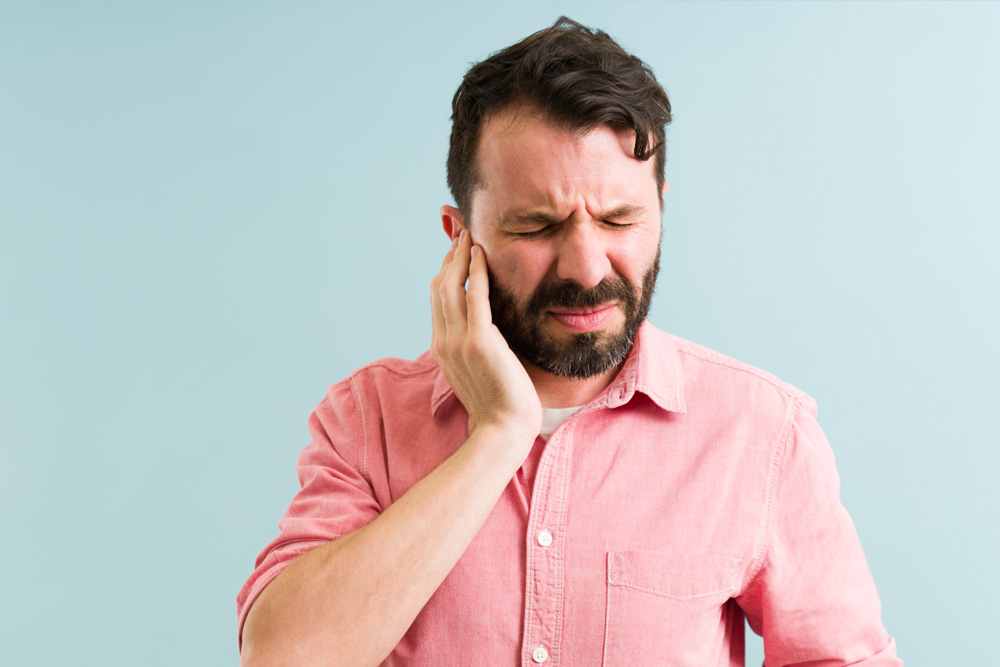
It may sound improbable, but it’s a reality – nearly 50% of individuals experiencing ear pain find its root cause in jaw and teeth issues. Scientifically, jaw joint and bite problems have been identified as contributors to tinnitus, the persistent ringing or humming noise

Multiple sclerosis (MS) is a challenging condition impacting around 2.3 million individuals globally, characterized by inflammation and demyelination in the central nervous system. While the origins of MS remain elusive,

Yoga, Ayurveda, and alternative healing methods, including Dr. Lajpatrai Mehra’s Neurotherapy (LMNT), trace their historical and philosophical roots to ancient Indian traditions. While they are distinct practices, they are often interconnected and complementary in promoting holistic well-being.

Alzheimer’s disease is the most common form of dementia, affecting millions worldwide. This progressive brain disorder gradually erodes memory and cognitive function, accounting for 60–80% of all dementia cases. In this post, we explore what causes Alzheimer’s, who’s most at risk

In today’s busy world, it’s common to grab an antacid whenever we feel stomach troubles. Antacids are popular for easing conditions like GERD and hyperacidity, but they don't fix the real problem and using them a lot can mess up important body processes like digesting protein and absorbing nutrients.

Vitamin D, the sunshine vitamin, is now recognized not only for its importance of bone health in children and adults, but also for other health benefits including reducing risk of chronic diseases including autoimmune diseases, cancer, and cardiovascular diseases.

Take a closer look at the picture. Do you observe a subtle tilt in the posture of the three gentlemen on the left? This deviation becomes apparent when you analyse the varying lengths of their arms on each side of their bodies. Identified as scoliosis of the spine in medical terms, this postural
